
Make Your Website AI-Search Ready
Google and AI search now answer before they send clicks. Learn how clean semantics, structured data, and fast pages make your site understandable — without buying an SEO package.
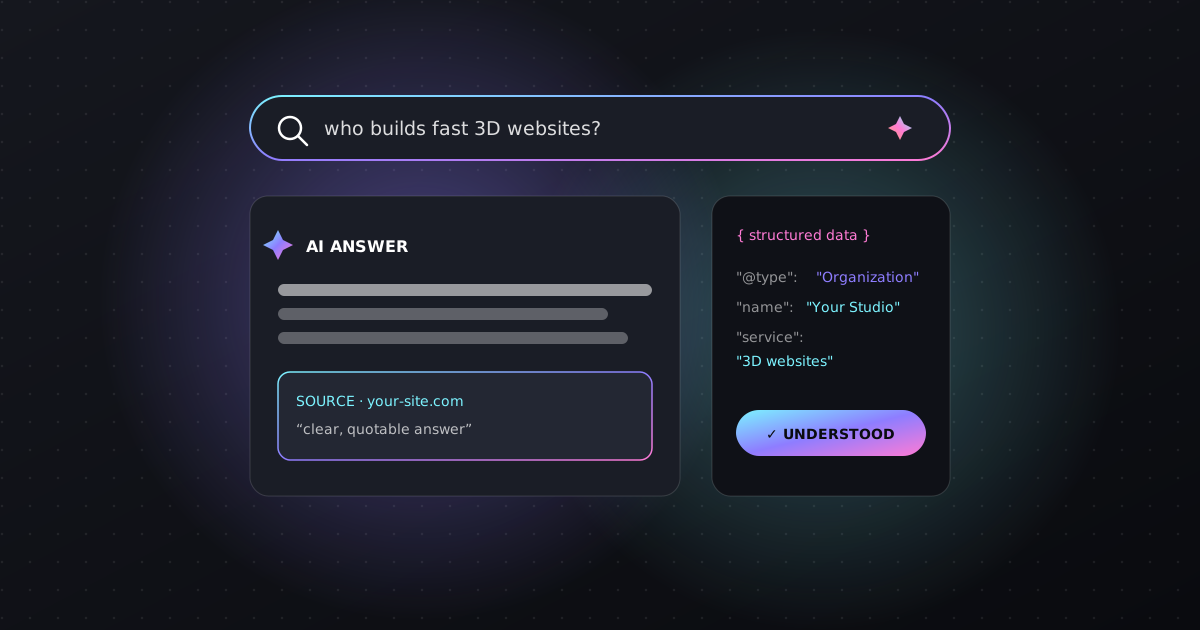
Imagine a very fast librarian
Search engines and AI assistants are like a librarian who has read millions of books and answers questions by quoting the clearest ones. When someone asks, “Who builds 3D websites in India?”, the librarian doesn’t admire your design — it reads your pages and decides whether it understands them well enough to recommend you. Our job is simple to say and worth doing well: make your site the easiest book in the library to understand.
Lesson 1: Say what things are (semantics)
A page built only from generic boxes is like a book with no chapter titles. Use real headings in order (one main title, then sections), real lists for lists, real buttons for buttons, and descriptive link text (“See our e-commerce work” beats “click here”). The librarian uses this structure to understand what’s important.
Lesson 2: Label the facts (structured data)
Structured data is a small, invisible label attached to your page that states facts plainly: this is an organisation, here is its name, its services, its contact details; this is an article, written on this date. It’s like adding a neat index card to the front of your book. Machines don’t have to guess — they can read the card.
Lesson 3: Answer real questions clearly
AI answers are built from clear, quotable sentences. Write the way you’d explain to a new customer: who you help, what you deliver, how long it takes, what it involves. A good FAQ section is gold here — each question is something a real person asks, and each answer is short enough to quote.
- Put the direct answer first, then the detail.
- Use the words your customers use, not internal jargon.
- Keep one topic per page so the page has a clear purpose.
Lesson 4: Be fast and reachable
A librarian can’t recommend a book it can’t open. Pages should load quickly, work on phones, and show their main text without needing heavy scripts first. Keep a sitemap so every important page can be found, and make sure nothing important is hidden behind logins or images of text.
Your weekend checklist
- [01]
One clear title per page
Each page gets a single main heading that says exactly what it’s about.
- [02]
Add organisation details
Name, services, location served, and contact info — visible on the page and in structured data.
- [03]
Write a real FAQ
Collect the questions customers actually ask and answer each in two or three sentences.
- [04]
Check speed on a phone
If the main content takes long to appear, fix that before anything else.
- [05]
Submit a sitemap
So search engines can find every important page.
Why does descriptive link text matter?
It tells both people and machines where the link goes, which helps them understand how your pages relate.
What is structured data, in one sentence?
A machine-readable label on a page that states its key facts plainly — and must match what’s visible.
Can a beautiful but very slow page rank well in AI answers?
It’s at a disadvantage — if the content is hard to load or read, it’s less likely to be understood and quoted.
- Structure your pages so their meaning is obvious.
- Label key facts with structured data that matches the page.
- Write clear, quotable answers to real customer questions.
- Fast, reachable pages get read; slow, hidden ones get skipped.
Want this done for your business?
Start a project